
Best practices for car park ventilation and smoke extraction
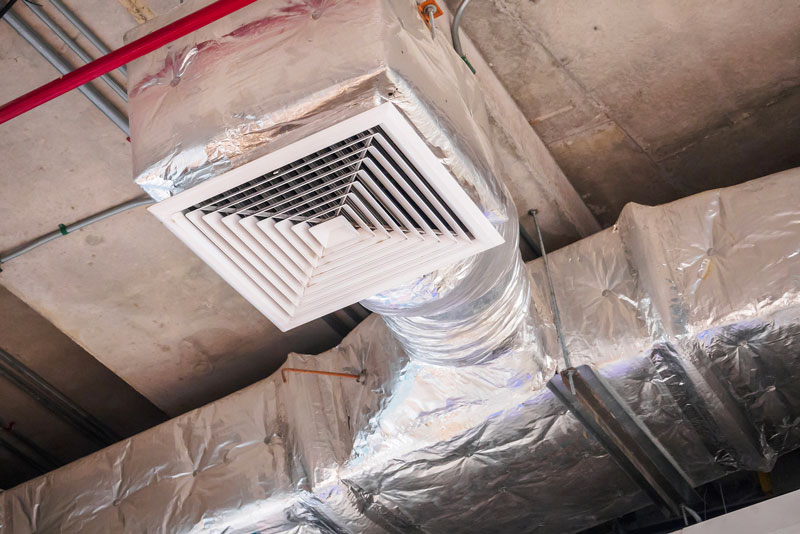
To create an effective, easy-to-operate ventilation and smoke extraction system for an underground car park, it is important to pay attention to details that improve the quality of the installation.
Selecting each component of the car park smoke extraction and ventilation system
Under the regulations, car park smoke extraction controls (firefighter controls) must be selective. This means that a « function » controls all the fans in a compartment, distinguishing between extraction and air supply. This « function » must have at least two positions: automatic and smoke extraction. There is no « firefighter stop » function, as defined in NFS 61-932, for an underground car park. No reset is required either.
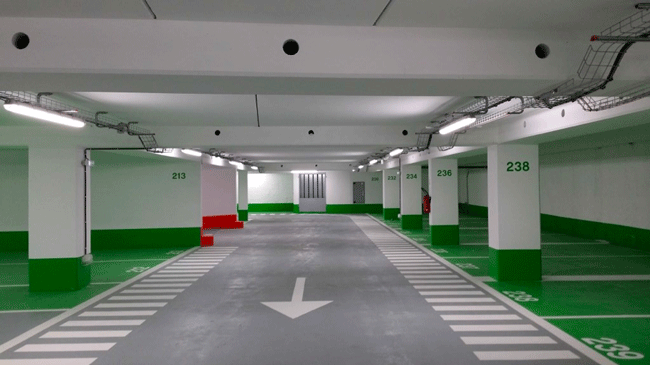
Installing relay control boxes for the fans is not mandatory. Furthermore, certain regulatory requirements for car parks in buildings open to the public make the use of relay control boxes impossible.
Energy efficiency requirements favour variable frequency drives over contactors for fan control. This does not compromise smoke extraction performance in any way. Instead, it delivers high efficiency at the low airflow rates used for day-to-day ventilation, avoiding the poor efficiency of the low-speed setting in a Dahlander connection.
For pollutant detection, electrochemical sensors installed directly in the car park enable early detection of pollutant build-up. They therefore perform better than an aspirating system, which provides averaged readings with intervals of up to ten minutes between measurements.
Equipment placement
To ensure easy operation by emergency services in the event of a fire, firefighter controls should not be installed on the ramp. Hot gases and smoke may accumulate there). It is preferable to install them in a protected location before the ramp.
One role of underground car park ventilation is to clear smoke. This keeps access routes to compartments clear. Extractor fans should therefore not be positioned near access ramps.
Positioning control cabinets close to the fans they control (less than three metres away) not only minimises cable requirements but also allows the door-mounted isolator handle to serve as the fan's local isolation point.
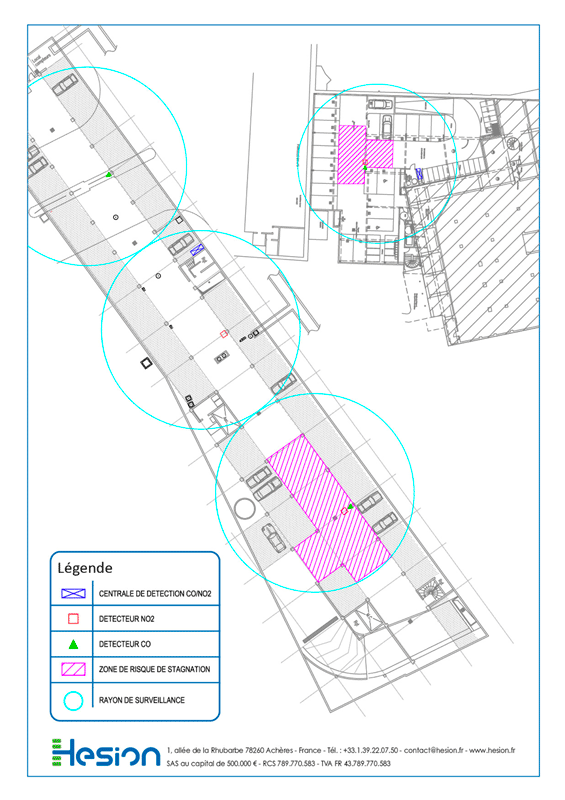
When it comes to pollution detection, detector placement also has a major impact on system effectiveness. The aim is to prevent pollutant build-up. It therefore makes more sense to position detectors along traffic routes and near areas with regular vehicle movements (routes between levels), or at intersections.
What is car park ventilation for?
Ventilation in underground car parks is essential for several reasons:
- Firstly, it helps limit concentrations of harmful or flammable gases in car parks, such as carbon monoxide. Its instantaneous concentration must not exceed 150 ppm, and its average exposure value must not exceed 20 ppm. Its threshold limit value must not exceed 100 ppm.
- Secondly, an automatic detection system is recommended for all car parks to improve safety and operation.
- Thirdly, mechanical ventilation is required for garages with more than 10 parking spaces. It is also mandatory for underground car parks. Finally, certain partially enclosed garages are also required by standards and regulations to install an electromechanical smoke control and ventilation system.
In the event of a fire, these systems can help extract smoke. They also help keep escape routes clear for occupants while making it easier for firefighters to access the affected area.
Hesion Gaz, a leader in gas detection solutions, offers a full range of services and products to equip your underground car parks with suitable systems.
If you have any questions about our services and products, please contact our team using the online contact form or call us on 01 39 22 07 50.
← All Gas Detection news