
Smarter, connected and better-managed car parks!
Publication: La Jaune et la Rouge (École Polytechnique alumni magazine)·Published: October 2022·Pages: 60-61·Section: Business Life · Mobility: what are the challenges?
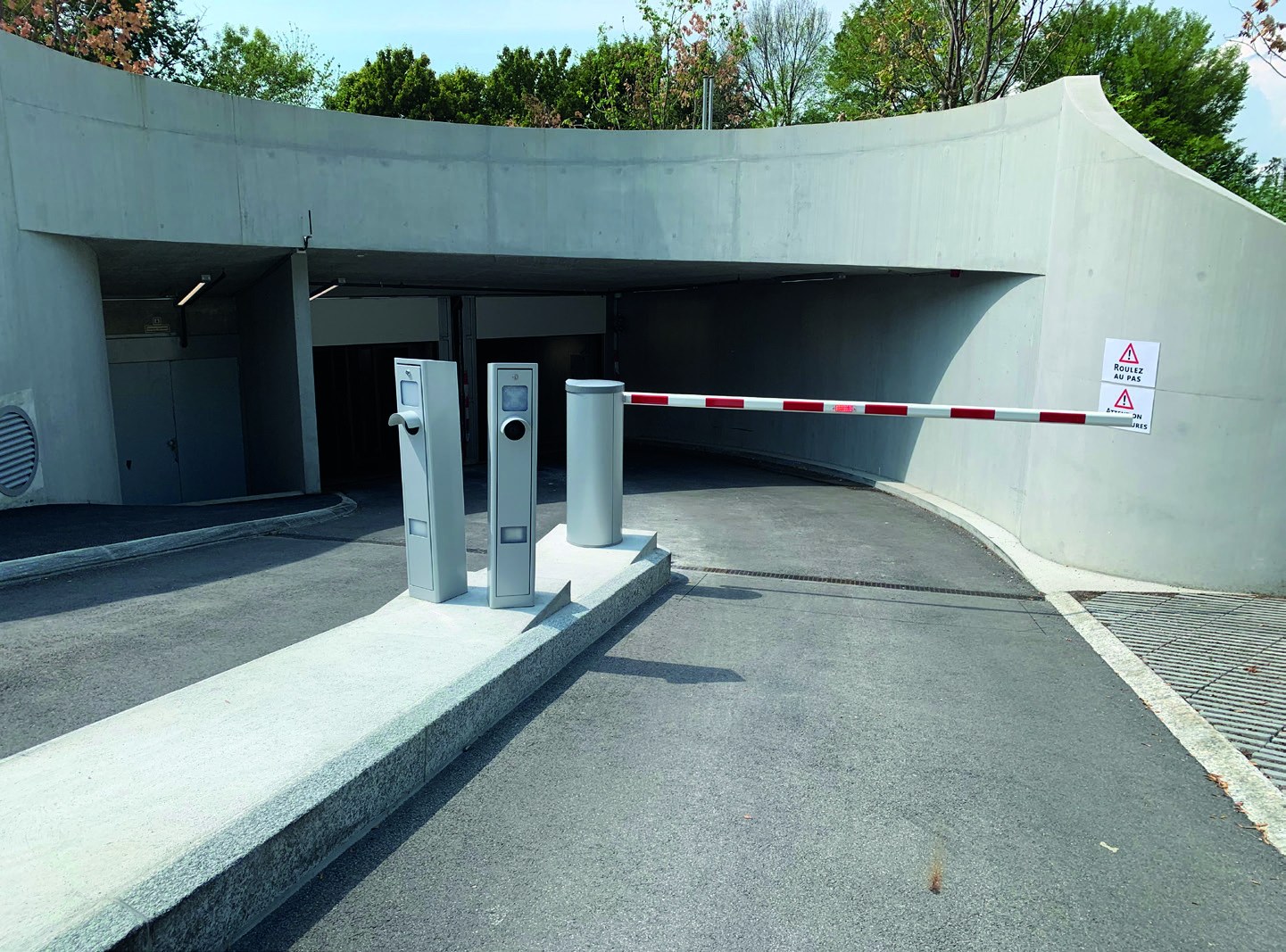
An essential component of tomorrow's mobility, car parks are central to intermodality, interconnection and environmental and energy challenges. With smart solutions designed and developed specifically for these spaces, Hesion optimises every aspect of their control and management. Pierre Guillet, CEO of Hesion and President of EDC, explains.
Smart parking is central to your business. What does it mean?
Historically, a car park was a place to store vehicles. Over the decades, as needs and societal challenges have evolved, these storage areas have become mobility spaces. The car park has become a hub that enables people to move from one place to another. Today's new usage patterns are driving a reduction in car park construction and the development of intermodality. However, parking remains central to this approach to mobility. We are still travelling, but differently.
At the same time, paid car parks in city centres, railway stations and airports are also evolving. Since the pandemic, they have experienced a sharp decline in usage. Rising fuel prices are exacerbating this trend. We are also seeing barriers and tickets gradually being removed in favour of « frictionless » access to these car parks. This simplifies the user journey while enabling owners and operators to replace expensive equipment with technologies that identify vehicles and bill users according to the duration of their stay.
Hesion focuses on two complementary areas to optimise car park operations. What are they?
Our solutions support the digitalisation of parking facilities, with a focus on:
- Accessibility: beyond managing access and ensuring smooth entry to car parks, our number plate recognition technology helps enforce the parking policy in place at a given site;
- Dynamic guidance: this system manages availability in real time, directs vehicles according to predefined operating rules and guides drivers to available spaces. This functionality significantly reduces traffic within car parks and, ultimately, the pollution caused by disorganised vehicle movements;
- Space-level identification: this solution monitors car park occupancy to optimise management during busy periods and support the implementation of parking policies.
We also offer solutions dedicated to energy management in these car parks. Traditionally, energy consumption in car parks has been associated with lighting and ventilation. While this remains true today, energy now also powers electric vehicle charging points. However, not all car parks were designed to support these loads simultaneously. For obvious regulatory and safety reasons, ventilation energy needs take priority. The challenge is therefore to allocate available power dynamically according to real-time demand and needs. In practical terms, our air quality and safety management solution enables the monitoring of car parks, air quality in underground facilities, and their ventilation and smoke extraction systems.
What role do innovation and technology play at Hesion?
Hesion has always invested significantly in innovation to offer high-performance solutions that keep pace with the evolution of car parks. Hesion is a vertically integrated company: from initial idea to finished solution, everything is developed in-house, in France.
Our work also involves generating data through the systems and solutions we install in car parks and making it available to optimise decision-making: opening a barrier, activating ventilation, prioritising power for ventilation over electric vehicle charging… To automate all these processes, we draw on the data collected and artificial intelligence.
We believe that system performance is a decisive factor in a client's choice. Our vehicle identification solution is based on neural network technology, enabling us to achieve a recognition rate above 95 % across all the countries in which we operate.
While Hesion is an innovative technology company, it is also committed to inclusion. It has set up a workshop to manufacture some of its systems in Poissy prison, where it employs an inmate.

How are you helping address today's major societal challenges?
Today, car park users want constant visibility of space availability and access whenever they need it. The challenge is therefore to make information accessible through the various tools they use (web, display panels, mobile apps). In a business setting, this means enabling employees to reserve a space. With the widespread adoption of remote working and soaring fuel prices, occupancy needs and space availability change daily, or even several times a day. Managing access rights is much more complex. It requires more sophisticated systems capable of multi-criteria management covering every scenario.
And then, of course, there is energy management in car parks. Using the data collected should help optimise investments (installing new charging points…), plan how the car park will evolve based on occupancy, and manage its energy consumption more precisely according to time slots, allocated quotas or load-shedding requirements.
Can you give us examples of projects you have carried out in this area?
Our solutions are installed at BNP Paribas group's Paris sites. We manage availability across all these sites instantly, simultaneously and dynamically, directing employees to a site where they can find a parking space, particularly during busy periods. Also in the Paris region, we have deployed our energy management solutions at the headquarters of ICADE and TF1 to optimise energy consumption associated with building ventilation. Thanks to our systems, they have seen their energy bills fall. And in Switzerland, for a major watchmaker, we implemented real-time access rights management, enabling every employee to manage their parking with peace of mind, including when carpooling.
How do you see your future in this market, and what are your ambitions and challenges?
The potential for deploying our solutions is considerable. For operator-managed public car parks, as well as workplace and residential car parks, the priorities are managing access rights and being able to adjust them dynamically, remotely and in real time. Air quality and the energy consumed by car park ventilation are also key issues: although the number of electric vehicles is growing, vehicles with internal combustion engines still account for a significant share of the global vehicle fleet.
We support our customers with these challenges in France, Switzerland and Canada, where we have an established presence. Parking practices in these countries are not always identical or comparable, but we strive to ensure that all our customers benefit from the advances we make in any given region or market.
← All press news