
Underground car park regulations
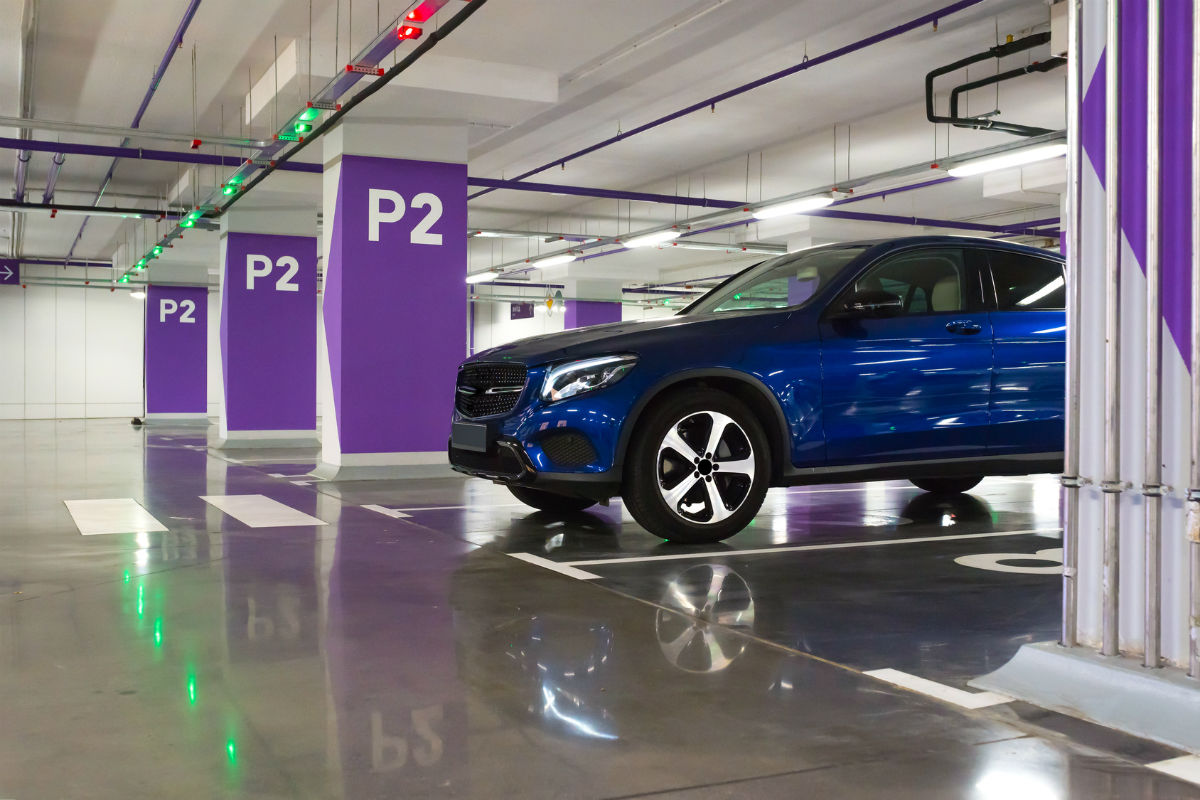
Both underground and above-ground car parks must comply with a number of standards, particularly regarding underground car park height. Mostly derived from the French Urban Planning Code, these regulations are designed to improve car park construction and operation, as well as user safety. To begin, here is an overview of the regulations currently in force.
What are the benefits of underground car parks?
Underground car parks offer numerous benefits, particularly in densely populated urban areas where space is limited. These benefits fall into several categories, from saving space to improving security.
- Space savings: Underground car parks maximise the use of space by allowing construction below ground level. This frees up space above ground for other infrastructure or green spaces.
- Weather protection: Vehicles parked in an underground car park are sheltered from extreme weather conditions. This helps extend their lifespan and maintain their value.
- Enhanced security: Underground car parks are generally equipped with advanced security systems, such as video surveillance and on-site security guards. These can help deter theft and vandalism.
- Reduced visual pollution: By keeping parked vehicles below ground, underground car parks help reduce visual pollution in urban areas.
- Temperature regulation: Being underground allows these car parks to regulate temperature naturally. Vehicles are less exposed to direct sunlight in summer and cold temperatures in winter.
- Easy access: Many underground car parks are located beneath buildings or shopping centres, providing direct, convenient access to nearby destinations.
In short, underground car parks offer a convenient, secure parking solution that maximises the use of space. They also provide protection from the weather and improve vehicle security.
.
Construction standards
The dimensions and layout of underground car parks are subject to a range of spatial requirements. These include dimensional standards for parking spaces, vehicle circulation areas and pedestrian routes, as well as the minimum height of underground car parks.
For example, standards NF P91-120 (for private car parks) and NF P91-100 (for public car parks) govern the recommended dimensions of parking spaces and access lanes. They specify dimensions for public access (for vehicles <3,5t and <1,90m high) and the minimum dimensions required for private parking spaces.
As with car park height, legislation also stipulates a quota of parking spaces for disabled people. These must meet standards relating to:
- distances,
- car park entrances and exits,
- as well as dimensions and accessibility.
These requirements are designed to facilitate access for vehicles and people (including provisions concerning transport and housing for disabled people and their access to public premises and facilities, extract from Legifrance).
Construction, safety and fire protection rules must also be followed. These provisions fall under fire safety regulations for buildings open to the public, some of which specifically concern covered car parks. These orders specify the technical inspections and authorisations required to minimise risks. Most derive from legislative texts in the French Construction and Housing Code, such as Articles R. 122-16 and R. 123-43 on technical inspections (extract from the JORF of 21 December 2016).
.
Monitoring standards
In addition to the monitoring requirement stipulated by Article R273-7 of the French Internal Security Code, underground car park operators have a duty to monitor their premises. The arrangements required vary according to the car park's capacity. However, one principle remains constant: whenever the car park is accessible, monitoring is essential, whether by staff or video surveillance (extract from Legifrance concerning building construction, safety and protection rules).
Hesion's Eolparc © monitoring systems, for example, manage an entire network of detectors that continuously test air quality. With this monitoring in place, underground car parks can maintain compliance with air quality standards and protect their users.
This protects not only users but also the environment, as stipulated by the general requirements applicable to ICPE*. Since underground car parks emit polluting gases, operators have a duty to check emission levels and treatment. Here too, Hesion installations enable you to monitor compliance with these standards and meet current legal requirements (with fines for non-compliance).
.
Extraction and evacuation standards
Since underground car parks generate harmful gases during use, these gases must be extracted. For exhaust gases, for example, ventilation must be capable of starting on command to prevent permitted thresholds from being exceeded:
- The average CO2 concentration calculated over any 8 consecutive hours must not exceed 50 ppm;
- The average concentration calculated over any 20 minutes must not exceed 100 ppm;
- The instantaneous concentration must not exceed 200 ppm.
For this purpose, Hesion offers detection systems similar to those used in boiler rooms. They trigger ventilation to extract gases as soon as concentrations are deemed too high. Underground car park monitoring solutions, such as the Sensoparc 600 © system, use detectors to measure the concentration of different gases at several locations throughout the car park, enabling better programming of smoke extraction. Please ask us about Hesion Gaz.
Alongside gas extraction, the evacuation of people must also be considered. Regulations on safety requirements for covered car parks adjoining residential buildings set out the applicable rules. All matters relating to safety and accessibility refer back to the construction standards discussed above (and detailed on Legifrance).
.
.
With all these measures in place, you can operate your underground car park with peace of mind, supported by your Hesion Park expert. For underground car parks and their regulations, Hesion is your partner in meeting these standards, particularly in car park monitoring. Contact us with any questions, whether about gas, smoke extraction or car park height.
*: ICPE, or Installations Classified for Environmental Protection (texts available on Legifrance).
← All parking news